
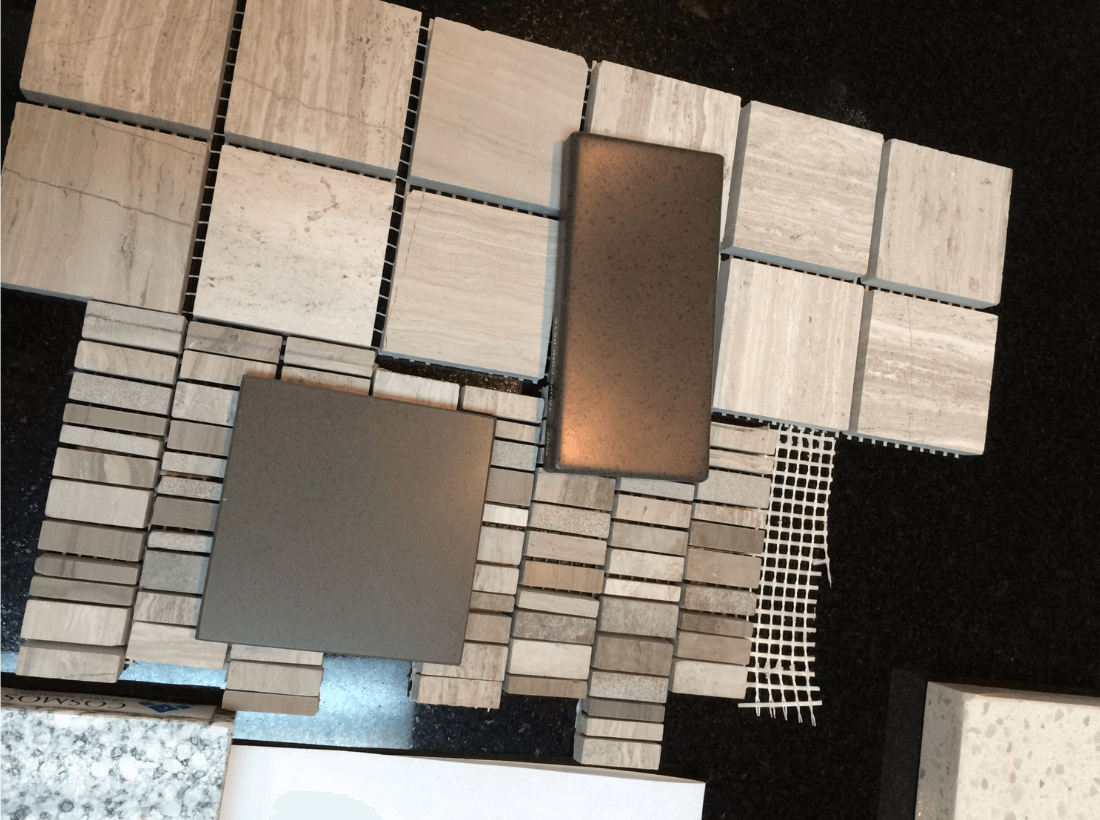
Bathroom Tile and Finish Selection Board
Corner Solutions assembled this bathroom tile selection board to coordinate flooring, wall surfaces, and finish details before the project moved into installation. The board combines larger stone-look tiles with smaller mosaic and trim pieces to create a balanced material plan. Sample finishes were included to confirm how hardware tones and surface textures work together in the same space. This approach reduces guesswork, keeps selections consistent, and supports a cleaner final result once tile work begins.
Large-Format Stone-Look Tile Foundation
The larger square samples establish the main visual direction for the bathroom, creating a calm, clean surface that reads modern and refined. Stone-look tile provides natural texture without the maintenance concerns that can come with real stone in wet areas. A lighter palette helps the room feel brighter and more open, especially when paired with clean grout lines. Using larger formats can also reduce the number of grout joints, which supports easier cleaning and a more continuous look.
Mosaic Accents for Detail Areas
The smaller mosaic pieces introduce texture and scale variation that can be used in shower floors, niches, borders, or feature strips. These details help break up large surfaces and add a more custom feel without overwhelming the space. Mosaic layouts also improve traction in certain areas where slip resistance matters more. A coordinated mosaic selection keeps the accent work tied to the main tile so everything feels intentional, not random.
Finish Samples for Hardware and Trim Coordination
Finish samples were included to confirm how metal tones will read against the tile palette in real lighting. Hardware color can shift dramatically depending on undertones in the tile and the temperature of the light bulbs used in the room. Testing finishes alongside tile helps prevent mismatches that are hard to ignore once fixtures and trim are installed. This step supports a more unified look across faucets, shower hardware, accessories, and any trim pieces.
Color Balance and Undertone Planning
Bathrooms look best when undertones are controlled, especially with grays, beiges, and stone-inspired surfaces that can swing warm or cool. This board helps verify that the primary tile and accent materials stay in the same family so the room doesn’t feel conflicted. It also supports decisions around grout color, trim profile, and where contrast should appear. Getting undertones right upfront keeps the finished bathroom feeling calm and cohesive.
Installation Clarity Before Work Begins
A selection board does more than confirm style—it also clarifies what goes where during installation. It helps define the main field tile, the accent zones, and the trim or edge pieces needed for clean transitions. That clarity supports better scheduling and fewer delays because the material plan is set before tile work starts. It also reduces change orders and keeps the installation team aligned on the intended finish.
A More Cohesive Bathroom From the Start
This project reflects Corner Solutions’ detail-first approach to bathroom design and execution. Coordinating tile, mosaics, and finishes upfront creates a stronger final space and a smoother build process. The result is a bathroom that looks composed, feels higher-end, and holds together visually from every angle. When selections are made with this level of care, the installation reads cleaner and the finished space feels more complete.