


Hardwood Flooring Installation in Cary NC: What Homeowners Should Know Before Starting
Hardwood flooring continues to stand out as one of the most reliable and long-term surface upgrades for homes in Cary, NC. It is not just selected for its appearance, but for how it performs over time across daily use, seasonal changes, and evolving interior design preferences. A well-installed hardwood floor supports structure, durability, and consistency across living spaces, making it a foundational element rather than a simple finish.
Homeowners preparing for installation benefit from understanding how hardwood behaves, how installation methods vary, and how environmental factors in Cary influence long-term performance. Projects completed by Corner Solutions NC reflect a process-driven approach where planning, material selection, and execution all work together to support reliable outcomes.
This guide outlines what to expect before starting hardwood flooring installation, along with key considerations that impact how the flooring looks and performs across time.
How Hardwood Flooring Fits Within Broader Flooring and Renovation Projects
Hardwood flooring is often part of a larger renovation or construction plan rather than a standalone upgrade. Many homeowners incorporate new flooring into kitchen remodels, bathroom updates, or full interior renovations. Understanding how hardwood integrates with other materials ensures a consistent finish across the home.
Projects that include kitchen renovations or bathroom remodeling often require transitions between hardwood, tile, and other surfaces. Planning these transitions early helps maintain flow while preventing uneven surfaces or material conflicts.
Homeowners exploring broader upgrades can also review residential renovation services in Cary to understand how flooring decisions connect to layout, cabinetry, and structural updates.
Understanding Hardwood Flooring Types and Material Structure
Hardwood flooring includes both solid hardwood and engineered hardwood, each designed to perform under different conditions. Solid hardwood consists of a single piece of wood and is commonly installed over wood subfloors using nail-down methods. It offers long-term refinishing potential and a traditional structural feel.
Engineered hardwood features a layered construction that improves stability, particularly in environments with fluctuating humidity levels. This makes it a strong option for Cary homes where seasonal changes affect indoor moisture levels. Engineered products can be installed using glue-down or floating methods depending on the project.
Examples of engineered hardwood applications can be seen in projects like this installation with tight seam alignment, where precision contributes directly to long-term durability.
Climate Considerations for Hardwood Flooring in Cary NC
Cary’s climate introduces consistent humidity shifts throughout the year, which directly affect hardwood flooring. Wood expands when moisture levels increase and contracts when air becomes drier. These natural movements require proper planning to avoid visible gaps or surface distortion.
Acclimation is one of the most critical steps before installation. Hardwood materials must adjust to indoor conditions before being installed, allowing them to stabilize relative to the home’s environment. Subfloor moisture levels must also be tested to prevent issues from below the surface.
Projects such as custom hardwood sourcing and acclimation work highlight how preparation plays a major role in final results.
Subfloor Preparation and Structural Readiness
The condition of the subfloor determines how well hardwood flooring performs after installation. Uneven surfaces, moisture issues, or structural inconsistencies can lead to long-term problems such as squeaking, shifting, or premature wear.
Subfloor preparation includes leveling, securing loose areas, and addressing moisture concerns. Depending on the structure of the home, different installation approaches may be required. Nail-down installations require wood subfloors, while glue-down systems are often used over concrete.
Corner Solutions NC evaluates subfloor conditions as part of their flooring services in Cary, ensuring that each installation begins with a stable and properly prepared base.
Wood Species Selection and Performance Expectations
Different wood species offer varying levels of hardness, grain patterns, and durability. Oak remains one of the most widely used species due to its balance of strength and visual consistency. Hickory provides increased hardness with more variation in grain, while maple delivers a smoother, more uniform appearance.
The choice of species should reflect how the space is used. High-traffic areas benefit from harder woods, while lower-use spaces may allow for more variation in appearance. Projects like wide plank white oak installations demonstrate how material selection shapes the overall feel of a space.
Installation Methods and Their Long-Term Impact
Hardwood flooring installation methods influence both structural performance and how the floor feels underfoot. Nail-down installations provide a secure attachment for solid hardwood, while glue-down methods create a firm bond for engineered flooring.
Floating systems offer flexibility but may not provide the same level of stability as fixed installations. Choosing the correct method depends on subfloor conditions, material type, and the overall layout of the home.
Examples of clean installation execution can be seen in projects like custom home hardwood installations, where plank alignment and transitions contribute to a consistent finish.
Layout Direction and Visual Flow Across the Home
The direction of hardwood planks affects both the visual perception of space and how the flooring interacts with structural elements. Installing planks parallel to natural light or along the longest wall often creates a more open and cohesive appearance.
Layout planning also includes expansion gaps and transition areas between rooms. These details allow the flooring to respond to seasonal movement without creating visible stress points.
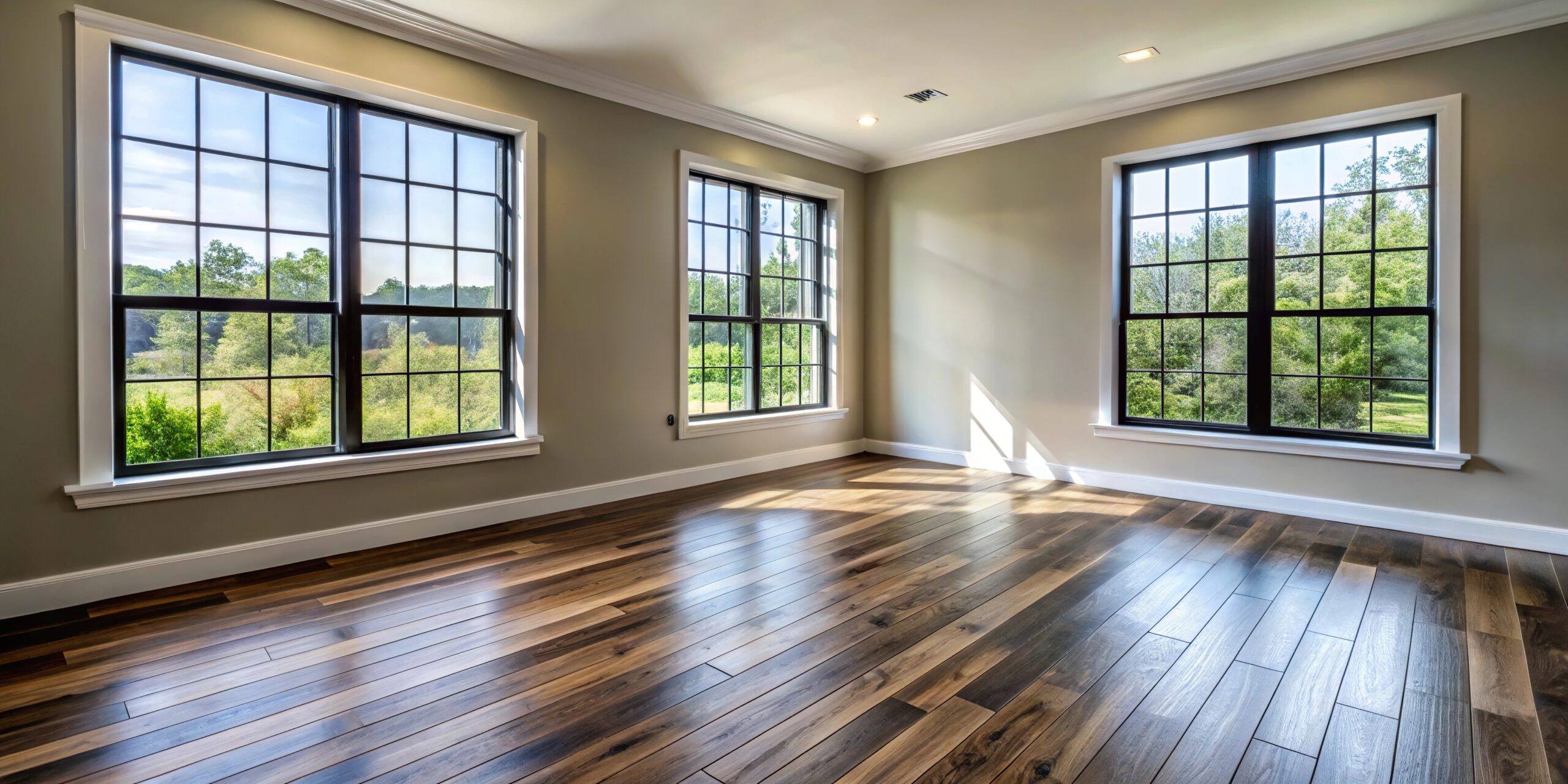
Projects such as walnut tone hardwood with clean transitions highlight how layout decisions impact the final look.
Coordinating Hardwood With Other Flooring Types
Many homes incorporate multiple flooring materials across different spaces. Hardwood often transitions into tile, carpet, or luxury vinyl plank depending on the function of each room.
Understanding how these materials work together is essential for maintaining consistency. Homeowners can explore related flooring categories such as tile flooring, carpet, and LVP flooring to see how different surfaces complement hardwood.
These combinations are often featured in broader project galleries like completed project collections, showing how materials are used together in real spaces.
Finish Types and Surface Protection
The finish applied to hardwood flooring determines how it resists wear and how it reflects light within a space. Site-finished floors provide a seamless appearance with customizable stain options, while prefinished boards offer durability and consistency from factory-applied coatings.
Each finish type has its advantages depending on project timelines and design preferences. The choice should align with how the space will be used and how much maintenance is expected over time.
Maintenance and Long-Term Care
Maintaining hardwood flooring involves consistent cleaning, managing indoor humidity, and protecting high-traffic areas. Simple steps such as using protective pads under furniture and addressing spills quickly help preserve the surface.
Over time, refinishing may be required to restore the appearance of the floor. The frequency depends on usage and the type of finish applied. Proper maintenance ensures that hardwood continues to perform as intended for years.
Hardwood Flooring Within Full Construction and Renovation Projects
Hardwood flooring is often installed as part of larger construction or renovation efforts. Projects involving residential and commercial construction or construction services in Cary require coordination across multiple phases.
Flooring installation typically occurs after structural work is complete but before final finishes are applied. This timing ensures that the flooring integrates properly with walls, cabinetry, and other elements.
Corner Solutions NC approaches these projects with a focus on sequencing and coordination, ensuring that flooring installation supports the overall build rather than becoming an isolated step.
Exploring Hardwood Flooring Projects and Real Applications
Seeing completed projects provides valuable insight into how hardwood performs across different environments. The hardwood portfolio category includes a range of installations that demonstrate variation in species, finishes, and layouts.
Additional examples such as dark hardwood flooring installations and light wood flooring finishes show how different styles impact interior spaces.
Planning Your Hardwood Flooring Project With a Structured Approach
Successful hardwood flooring installation requires coordination across multiple factors, including material selection, subfloor preparation, layout planning, and installation methods. Each step contributes to how the flooring performs over time.
Homeowners working with Corner Solutions NC benefit from a process that prioritizes preparation and execution, ensuring that every detail supports long-term results. Those ready to begin can connect through the contact page to discuss project specifics.
Hardwood flooring is not just a surface decision. It is a structural upgrade that shapes how a home looks, feels, and performs. When installed with the right approach, it becomes one of the most dependable and lasting elements within the space.
AUTHOR
