


Stained Concrete Floors for Cary Homes: Durable Finishes with Custom Appeal
Stained Concrete Floors for Cary Homes with Durable Finish Appeal
Stained concrete floors give Cary homeowners a durable, low-maintenance, and highly customizable flooring option that can transform an ordinary slab into a finished design feature. Instead of covering concrete with another material, this approach turns the existing surface into part of the home’s visual identity. That makes it especially valuable for renovations, basements, patios, kitchens, garages, and open living spaces where strength and appearance both matter. For homeowners comparing concrete flooring in Cary with other options, stained concrete offers a distinctive blend of long-term performance and custom appeal.
Many Cary homes already include concrete slabs beneath carpet, tile, laminate, or unfinished lower-level flooring. When properly prepared, stained, and sealed, that slab can become a polished, earthy, modern, rustic, or stone-inspired surface that feels intentional rather than utilitarian. This is especially useful in homes where flooring needs to connect with cabinetry, paint colors, lighting, outdoor spaces, and broader residential renovation in Cary goals. Stained concrete works best when it is planned as part of the whole property instead of treated as a quick surface treatment.
The appeal also fits the way many Cary and Triangle-area homeowners are updating their spaces. Open-concept kitchens, finished basements, outdoor living areas, poolside patios, and garage conversions all require surfaces that can handle real use without constant worry. Stained concrete can support busy households, pets, entertaining, moisture exposure, and changing design preferences while maintaining a clean, cohesive appearance. It can also work alongside home remodeling services in Cary when a homeowner wants the flooring, walls, finishes, and exterior transitions to feel connected.
The Enduring Appeal of Stained Concrete in Cary Homes
Cary homeowners often want flooring that feels attractive enough for finished living spaces but strong enough for everyday life. Stained concrete meets that need because the finished surface is built from one of the most resilient materials already present in many homes. Concrete can withstand foot traffic, furniture weight, pets, dropped items, and frequent use in ways that many softer materials cannot. When the slab is properly stained and sealed, the floor becomes both functional and visually expressive.
The staining process is not the same as painting concrete. Paint sits on the surface and can chip, flake, or peel when it is exposed to traffic or moisture. Stain penetrates or reacts with the concrete, depending on the system used, creating color that becomes part of the slab’s character. This distinction matters because stained concrete is designed to reveal and elevate the surface rather than simply cover it. The result can be subtle and matte, rich and variegated, polished and modern, or decorative and stone-like.
Stained concrete also gives homeowners design flexibility that many standard flooring materials cannot match. Instead of being limited to premanufactured planks, tiles, or carpet colors, the finish can be shaped around the room, lighting, surrounding materials, and personal style. Warm acid stains can create earthy movement similar to leather, stone, or aged plaster. Water-based stains can create cleaner grays, soft neutrals, or more controlled contemporary tones. Decorative scoring, borders, stenciling, and layered colors can make the floor feel like a custom architectural element.
This makes stained concrete especially useful in Cary homes where the flooring needs to complement multiple design influences. A traditional brick exterior may open into a modern kitchen with white cabinetry and black fixtures. A finished basement may need to feel warm and livable without introducing moisture-sensitive flooring. A patio may need to connect visually with landscaping, masonry, and outdoor entertaining areas. Stained concrete can adapt to each of those settings while still delivering the durability homeowners expect.
The Foundation of Durability Behind Stained Concrete
Concrete is one of the strongest materials used in residential construction, and stained concrete takes advantage of that existing strength. A finished stained concrete floor can resist dents, scratches, and everyday abrasion better than many softer flooring options. This is especially important in active Cary households where children, pets, furniture movement, shoes, and entertaining can quickly wear down more delicate materials. The surface can support heavy use while still maintaining a polished, intentional look.
A properly sealed stained concrete floor also helps protect against spills and stains. Kitchens, dining areas, basements, entryways, and garages all benefit from a surface that can be cleaned without specialized products or constant deep maintenance. The absence of grout lines also makes cleaning simpler compared with many tile installations. Dirt, pet hair, dust, and debris remain on the surface where they can be swept, vacuumed, or damp mopped away.
The longevity of stained concrete is one of its strongest advantages. Carpet may need replacement after years of wear, hardwood may eventually need refinishing, and some floating floors may show edge swelling, separation, or wear-layer damage over time. Stained concrete, when installed correctly, can last for decades with periodic resealing and routine care. That long service life can make it a smart investment for homeowners who want a floor that does not need to be replaced every time design trends or household demands change.
Concrete also has natural thermal mass, which means it can absorb and release heat gradually. In Cary homes, this can help contribute to more stable interior comfort, especially in slab-on-grade spaces, basements, sunrooms, and open-concept rooms. While stained concrete is not a heating or cooling system by itself, it can work well with thoughtful renovation planning. In some applications, it can even pair with radiant floor heating to create a warmer and more comfortable surface during cooler months.
Custom Concrete Finishes for Cary Interiors
The most compelling stained concrete projects are not simply durable; they are visually specific to the home. The same material can feel refined, rustic, industrial, contemporary, transitional, or natural depending on the stain system and finish level. This flexibility makes stained concrete a strong option for Cary homeowners who want their flooring to support the architecture and interior style of the property. It can serve as a quiet backdrop or a dramatic design feature.
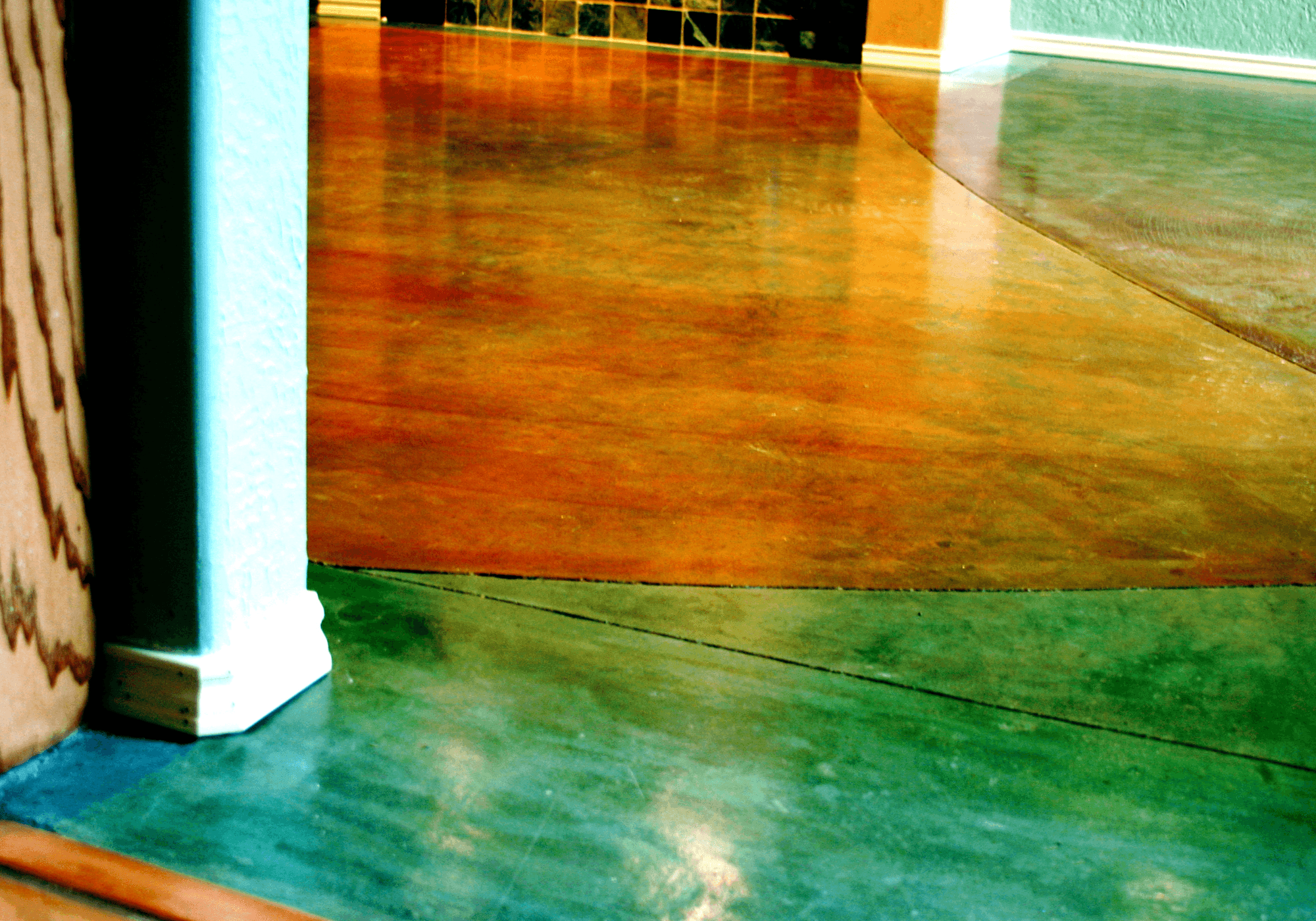
Acid stains create some of the most organic and unpredictable concrete finishes. These stains react chemically with the minerals in the concrete, creating a translucent color effect that often resembles natural stone, aged leather, or weathered patina. The variations are part of the appeal because no two slabs react exactly the same way. A warm brown acid stain can bring depth to a basement recreation room, while a green, amber, or terra cotta tone can create a more rustic or Mediterranean-inspired appearance.
Water-based stains offer a different kind of control. These stains do not rely on the same chemical reaction, which allows for broader color selection and more predictable results. They are especially useful when a homeowner wants a specific gray, charcoal, taupe, cream, or modern neutral that coordinates with cabinetry, countertops, wall colors, and lighting. This makes water-based stained concrete a strong fit for updated kitchens, modern living spaces, home offices, and finished basements where the design palette needs to feel more precise.
Metallic and decorative finishes offer another level of customization. Metallic pigments can create movement, shimmer, and depth that shift as light changes across the floor. These finishes are often used in statement spaces such as entryways, entertainment rooms, studios, and high-design interiors. They should be selected carefully because they create a stronger visual presence than standard stains, but when used in the right setting, they can turn the floor into a defining feature of the room.
Decorative Scoring, Faux Stone, and Custom Pattern Options
Decorative scoring allows stained concrete to take on structure, rhythm, and pattern. Shallow cuts can be made into the slab to create grids, borders, large-format tile effects, geometric layouts, or custom design accents. When paired with layered staining, scoring can create the look of slate, travertine, flagstone, marble, or oversized tile without introducing traditional grout lines. This gives homeowners the visual appeal of decorative flooring while keeping maintenance more manageable.
Faux-stone finishes are especially useful in spaces where homeowners want a high-end look without the upkeep or cost of natural stone. A scored and stained patio can look like large stone pavers while remaining a continuous concrete surface. A basement floor can be transformed into a slate-inspired entertainment area. An entryway can use darker borders and lighter interior fields to create a more formal arrival experience. These details help the flooring feel designed instead of simply finished.
Custom border accents can also help define open-concept layouts. In many Cary homes, kitchens, dining areas, and living rooms flow into one another, which creates a need for subtle visual separation. Scoring can frame a dining area, highlight an island, create a pathway, or add architectural definition without interrupting the continuity of the floor. This is especially helpful in larger rooms where a single uninterrupted surface may need added visual interest.
Stenciled patterns and geometric motifs can provide more personal expression. These elements can be subtle, such as a faint border or tonal pattern, or more dramatic, such as a decorative medallion or modern geometric feature. The best applications are planned around the room’s scale, furniture layout, and surrounding finishes. A pattern that feels balanced in a large entryway may feel too busy in a smaller room, so design planning is essential before the stain is applied.
Concrete Slab Evaluation Before Staining
The quality of a stained concrete floor begins long before color is applied. The existing slab must be evaluated to determine whether it is suitable for staining, how much preparation it needs, and what visual limitations may remain. Older Cary homes may have slabs that have been covered by carpet, tile, vinyl, laminate, or previous coatings for many years. Those layers can leave behind adhesives, stains, curing compounds, paint, moisture marks, or surface contamination that affect the final result.
Slab age, density, porosity, and surface hardness all influence how stain behaves. Some concrete absorbs stain readily, while other slabs resist penetration because of prior sealers, finishing compounds, or dense surface conditions. Acid stains may react beautifully in one area and more subtly in another because of mineral variation within the slab. Water-based stains can offer more control, but they still depend on proper surface preparation and consistent absorption.
Existing cracks also need to be evaluated honestly. Some hairline cracks can be filled, softened visually, or incorporated into the natural character of the floor. Larger cracks, moving cracks, spalling, or uneven slab sections may need more extensive repair before staining can begin. In some cases, a different flooring option may be more appropriate if the slab condition does not support the desired finished look. This is why a realistic site assessment matters so much.
Patch compatibility is another detail that can influence results. Repair materials may not accept stain the same way as the surrounding concrete, especially if the project uses acid stain. Skilled preparation can minimize visual differences, but homeowners should understand that stained concrete often celebrates the history of the slab rather than hiding every imperfection. A successful project depends on matching expectations with the actual condition of the concrete.
Surface Preparation and Grinding for a Better Finish
Surface preparation is the most important technical step in a stained concrete project. Dirt, grease, oil, paint, old sealers, tile mastic, carpet glue, and curing compounds can all block stain penetration and create uneven results. These contaminants must be removed before the floor can be stained properly. A beautiful stained concrete floor is built on preparation that most homeowners will never see once the work is complete.
Diamond grinding is often used to remove coatings, smooth irregularities, and open the pores of the concrete. The process can involve different grit levels depending on how rough, dense, or contaminated the slab is. Coarser grinding may be needed to remove old adhesive or coatings, while finer passes can refine the surface for a smoother finish. The goal is not simply to make the slab look cleaner; it is to create a surface profile that allows stain and sealer to perform as intended.
Crack repair, patch feathering, and surface correction may also be needed before staining. Repair materials must be selected carefully because they can influence how the finished surface looks. Skilled installers understand how to blend repairs into the surrounding slab as much as possible while also explaining which areas may remain visible. This is especially important in homes where the owner wants a refined finish rather than a rustic or heavily variegated look.
Preparation also affects dust, disruption, and project timing. Grinding can be noisy and may produce dust even when professional collection systems are used. Adjacent rooms, cabinetry, walls, trim, and other finishes should be protected. In larger renovation projects, stained concrete should be scheduled carefully so other trades do not damage the surface after it has been finished. This is one reason flooring decisions should be coordinated with broader residential renovation services in Cary.
The Installation Workflow from Slab to Finished Floor
A professional stained concrete installation follows a structured sequence. The process begins with a site visit, slab evaluation, design discussion, and moisture review. The homeowner should be able to discuss color goals, room use, furniture plans, cleaning expectations, sheen level, and any decorative scoring or pattern ideas before the work begins. These conversations help determine whether the final floor should feel rustic, modern, polished, soft, dramatic, or understated.
Once the scope is clear, preparation begins. Existing flooring may need to be removed, adhesives may need to be ground away, cracks may need to be filled, and the slab may need to be cleaned thoroughly. This is usually the most labor-intensive part of the project, but it is also the stage that determines whether the finished floor will look intentional. Poor preparation can lead to blotchy stain, peeling sealer, weak adhesion, or visible contamination.
Stain application requires both technical accuracy and artistic judgment. Acid stains need reaction time, neutralization, rinsing, and residue removal before sealing. Water-based stains often require carefully controlled layers to build color depth and consistency. Decorative scoring, faux-stone effects, borders, or stencils add additional steps that must be planned before color is applied. The best stained concrete floors feel natural, but that natural look is usually the result of careful sequencing.
Sealing completes the system and protects the finished surface. The sealer enhances the color, adds the desired sheen, and helps protect against abrasion, moisture, spills, and everyday wear. Curing time is important because the floor should not be exposed to heavy traffic, rugs, furniture, or cleaning too soon. Homeowners should receive clear instructions on when the floor can be walked on, when furniture can return, and how to clean the surface moving forward.
Moisture and Humidity Considerations for Cary Concrete Floors
Cary’s humid climate makes moisture management essential for stained concrete flooring. Concrete is porous, and moisture vapor can move through a slab even when the surface appears dry. This is especially important in basements, slab-on-grade homes, garages, sunrooms, and areas connected to outdoor living spaces. Ignoring moisture can lead to cloudy sealer, bubbling, delamination, discoloration, or premature coating failure.
Professional moisture testing helps determine whether the slab is ready for staining and sealing. Calcium chloride testing, relative humidity probes, and other evaluation methods can measure moisture vapor movement or internal slab humidity. These results help determine whether standard preparation is enough or whether a vapor mitigation system may be needed. Guessing is risky because moisture problems often appear after the floor is complete.
Hydrostatic pressure is another concern in below-grade spaces. If water pressure pushes upward through or around the slab, a decorative finish cannot solve the underlying problem by itself. Drainage, grading, waterproofing, gutters, foundation conditions, and moisture barriers may all need to be considered before the floor is finished. This is especially important for Cary basements where homeowners want to create livable family rooms, offices, guest areas, or entertainment spaces.
Sealer selection also matters in humid conditions. Some slabs may benefit from breathable sealers that allow limited vapor movement, while others may require stronger mitigation before a more protective system is installed. Exterior patios and pool decks need products that account for UV exposure, rain, pollen, red clay residue, and seasonal temperature changes. A stained concrete floor can perform beautifully in North Carolina, but it must be planned around the climate rather than installed as though every slab behaves the same way.
Sheen Levels, Sealers, and Slip Resistance
The final appearance of stained concrete depends heavily on the sealer and sheen level. Matte finishes tend to feel softer and more natural, making them a strong choice for basements, family rooms, and contemporary interiors. Satin finishes provide a balanced look with a subtle level of reflectivity. High-gloss finishes can create dramatic shine, but they may also show scratches, dust, and wear more readily in some residential settings.
Sealer type should be selected based on how the space will be used. Acrylic sealers are common in decorative residential settings and can offer a range of sheen options. Polyurethane sealers may provide stronger abrasion and chemical resistance for higher-traffic areas. Epoxy coatings can be useful in garages, workshops, or spaces where greater protection is needed. The right choice depends on the room, traffic level, cleaning expectations, moisture conditions, and desired appearance.
Slip resistance should be considered early, especially for patios, pool decks, porches, bathrooms, laundry rooms, and entries. Stained concrete can become slick if the wrong sealer is used or if a glossy finish is applied without texture or traction additives. Anti-slip additives can help improve safety while preserving the visual effect of the stain. This is particularly important for outdoor entertaining areas, poolside spaces, and homes with children, pets, or older family members.
Exterior stained concrete also needs UV-conscious product selection. Patios, walkways, and pool surrounds receive direct sunlight, rain, and changing temperatures. UV-stable sealers help reduce premature yellowing, dulling, and breakdown. Homeowners comparing stained concrete with stamped concrete installation in Cary should consider not only the look of each system but also maintenance, traction, resealing timelines, and how the surface will be used year-round.
Stained Concrete for Basements, Kitchens, Patios, and Garages
Basements are one of the strongest applications for stained concrete in Cary homes. Many lower-level spaces need a floor that can handle moisture better than carpet or certain wood-based materials. Stained concrete can help transform a basement from unfinished or utilitarian into a comfortable living area, media room, office, playroom, workout space, or guest area. Lighter stains can brighten rooms with limited natural light, while deeper tones can create a more grounded entertainment setting.
Kitchens and dining areas also benefit from stained concrete because they require flooring that can handle spills, frequent cleaning, chair movement, dropped utensils, and heavy traffic. A soft gray stained floor can work beautifully with white cabinets, black hardware, quartz countertops, and modern lighting. A warm brown or leather-toned acid stain can pair well with painted cabinetry, natural wood accents, and textured backsplashes. Homeowners planning kitchen renovation services in Cary can coordinate stained concrete with the entire finish package.
Outdoor patios, porches, pool decks, and walkways are also strong candidates when the right products are used. Stained concrete can complement landscaping, masonry, siding, outdoor kitchens, and pool areas while creating a low-maintenance surface for entertaining. A slate-inspired gray finish can feel modern and clean, while warm stone tones can support a more natural backyard setting. Homeowners planning broader residential exterior services in Cary can use stained concrete to create stronger indoor-outdoor continuity.
Garages and workshops are often overlooked, but stained and sealed concrete can make these spaces feel cleaner and more useful. A finished garage floor can reduce dusting, improve appearance, and make the room feel more like an extension of the home. This is valuable for homeowners using garages for hobbies, home gyms, tools, bikes, storage, or project work. In some cases, a more protective coating may be recommended depending on oil exposure, tire traffic, and chemical use.
Comparing Stained Concrete to Other Flooring Options
Stained concrete is not always the right choice for every room, but it deserves consideration when durability, moisture resistance, and long-term maintenance are priorities. Many Cary homeowners compare it with luxury vinyl plank flooring in Cary, tile flooring in Cary, hardwood flooring in Cary, carpet, epoxy, and polished concrete. Each material has strengths, and the right choice depends on comfort, style, moisture exposure, budget, and long-term goals.
Compared with LVP, stained concrete feels more permanent and architectural. LVP can be softer underfoot and offers many wood-look styles, but it relies on printed wear layers, seams, and product thickness. Stained concrete avoids plank separation, pattern repetition, and hidden moisture beneath floating floors. For homeowners who want a harder, cleaner, more structural finish, stained concrete may feel more substantial.
Compared with tile, stained concrete reduces grout maintenance and creates a more continuous visual flow. Tile remains an excellent option for many bathrooms, showers, and traditional interiors, but grout can become difficult to clean over time. Stained concrete can create a similar large-format or stone-inspired look through scoring while avoiding many grout-related issues. This makes it useful in larger rooms, patios, and basements where continuity matters.
Compared with hardwood, stained concrete offers different advantages. Hardwood brings warmth, grain, and classic resale appeal, but it can scratch, dent, cup, or require refinishing. Stained concrete does not provide the same softness or warmth, but it can perform better in moisture-prone or high-traffic spaces. Some homeowners may choose hardwood in main living areas and bedrooms while using stained concrete in basements, patios, garages, kitchens, or entertainment spaces. A whole-home flooring plan through flooring services in Cary can help determine where each material belongs.
Stained Concrete, Polished Concrete, and Hybrid Finishes
Stained concrete and polished concrete are related, but they are not the same finish. Stained concrete focuses on color, variation, design movement, and visual transformation. Polished concrete focuses on mechanical refinement, smoothness, reflectivity, and surface density. Some homeowners prefer the organic look of stained concrete, while others prefer the clean, modern appearance of polished concrete. A hybrid system can sometimes combine aspects of both.
Polished concrete can be a strong fit for modern interiors, studios, commercial spaces, and open layouts where reflectivity and a refined surface are priorities. Stained concrete may be a better fit when a homeowner wants warmer tones, faux-stone variation, decorative scoring, or a more handcrafted appearance. The right choice depends on whether the room calls for sleek refinement or richer visual movement.
Densifiers may become part of polished or hybrid systems because they help harden the concrete surface and reduce dusting. They are not a substitute for proper staining, sealing, or moisture testing, but they can support certain performance goals. The sequence of grinding, staining, densifying, polishing, and sealing must be planned carefully because each step affects the next. A professional evaluation helps determine whether a stained, polished, sealed, or hybrid finish makes sense for the slab.
For homeowners who want a custom look but are unsure which system fits best, reviewing completed work can help clarify the direction. The Corner Solutions NC project gallery can be useful for understanding how different materials, finishes, and spaces come together across real projects. Seeing how surfaces perform visually in context often helps homeowners move beyond product names and focus on the finished environment.
Maintenance, Resealing, and Long-Term Surface Care
Stained concrete is low maintenance, but it is not no maintenance. The stain itself can last for many years, but the sealer is the protective layer that takes daily wear. Regular sweeping, vacuuming with a hard-surface attachment, and damp mopping with a pH-neutral cleaner help preserve the floor’s appearance. Harsh chemicals, abrasive pads, vinegar-heavy cleaners, and aggressive scrubbing can dull or damage the protective finish over time.
Interior stained concrete floors may need resealing every few years depending on traffic, sealer type, pets, cleaning habits, and sunlight exposure. Kitchens, entries, and high-traffic areas may show wear sooner than guest rooms or lower-use spaces. Exterior patios and pool areas typically require more frequent attention because they are exposed to UV rays, rain, pollen, landscaping debris, and temperature changes. A simple water-beading test can help indicate whether the surface is still protected or beginning to absorb moisture.
Furniture pads, entry mats, and area rugs can help extend the life of the finish. Rugs should be selected carefully so they do not trap moisture or leave backing marks on the sealer. Spills should be cleaned promptly, especially acidic liquids or chemicals that could etch or dull the surface. Pet accidents should also be cleaned quickly to protect the finish and prevent lingering odor concerns.
Waxing and buffing may be appropriate for certain high-luster interior floors, but they are not always necessary or desirable. Some homeowners prefer a matte or satin look that does not require additional shine maintenance. Others may want a more polished appearance in formal areas or commercial-style spaces. Maintenance should match the finish that was selected rather than forcing every stained concrete floor into the same care routine.
Long-Term Property Value and Buyer Appeal
Stained concrete can contribute to property appeal because it offers something durable, custom, and visually distinct. Buyers often notice flooring quickly, especially in kitchens, finished basements, entries, and outdoor living areas. A well-executed stained concrete floor can signal thoughtful renovation, lower future maintenance, and a more modern property experience. This can be especially valuable in Cary’s competitive housing market, where updated finishes and usable living areas matter.
Finished basements with stained concrete can feel cleaner and more intentional than basements with worn carpet, exposed slab, or dated tile. Outdoor patios with decorative concrete can make the backyard feel more complete and entertainment-ready. Garages with sealed concrete can feel more organized and useful. These improvements do not simply change the look of a surface; they can change how the entire space is perceived and used.
Stained concrete also supports allergy-conscious and low-maintenance living. Unlike carpet, it does not trap dust mites, pet dander, pollen, and debris within fibers. Unlike tile, it does not require grout scrubbing across large areas. Unlike some wood products, it does not swell or warp when moisture is properly managed. These practical advantages can make the home feel easier to maintain for both current owners and future buyers.
Design relevance is another advantage. Stained concrete can be modern without feeling overly trendy when the color, sheen, and pattern are selected carefully. Warm neutral tones, soft grays, stone-inspired finishes, and subtle matte sealers can remain adaptable as furniture, paint, and décor change over time. That adaptability makes stained concrete a strong fit for homeowners who want a long-term finish rather than a short-cycle design update.
Commercial and Mixed-Use Stained Concrete Applications
Although stained concrete is often discussed in residential settings, it also works well for commercial and mixed-use spaces. Offices, studios, retail stores, salons, fitness spaces, restaurants, breweries, and showrooms often need flooring that can handle heavy foot traffic while supporting the character of the brand. Stained concrete can deliver a clean, durable, and custom look without relying on more fragile surface materials.
Commercial spaces may require different sealer choices, maintenance plans, and slip-resistance considerations than residential rooms. Traffic volume, cleaning schedules, equipment movement, and public safety expectations all influence the finish system. A matte or satin finish may reduce glare in offices and retail environments, while a more polished look may suit modern showrooms or creative studios. Decorative scoring and layered stains can also support wayfinding, brand character, or distinct zones within an open space.
For businesses planning broader internal commercial construction in Cary, stained concrete can be part of a complete interior update that includes walls, lighting, millwork, layout changes, and finish coordination. The flooring should support the business environment rather than simply survive it. A well-planned stained concrete finish can make a commercial space feel more refined, durable, and intentional.
Mixed-use spaces, home studios, workshops, and flexible residential-commercial environments can also benefit from stained concrete. These rooms often need to shift between practical and presentable. A stained floor can support client-facing use, hobbies, storage, creative work, or fitness without feeling unfinished. This crossover appeal is one reason decorative concrete continues to be relevant across both residential and commercial design.
Common Stained Concrete Mistakes Homeowners Should Avoid
One of the biggest mistakes homeowners make is assuming stained concrete will hide every flaw in the slab. In reality, stained concrete often highlights the natural character, history, and variation of the surface. That can be beautiful when expectations are clear, but frustrating when homeowners expect a perfectly uniform manufactured appearance. Slab testing, samples, and honest preparation discussions help prevent disappointment.
Another common mistake is choosing the wrong sheen. A very glossy floor can look dramatic in photos, but it may show dust, scratches, footprints, and glare in everyday living spaces. Matte and satin finishes often feel more livable in basements, kitchens, and family rooms. High-gloss finishes may still be appropriate in certain modern interiors or statement spaces, but they should be chosen intentionally rather than assumed to be the premium option.
Skipping moisture testing is a serious mistake in Cary homes. Humidity, slab-on-grade construction, basement conditions, drainage issues, and hydrostatic pressure can all affect sealer performance. A floor may look beautiful immediately after installation and then develop problems later if moisture was ignored. Proper testing and mitigation protect the investment and help ensure the finish performs over time.
Choosing the lowest bid can also create problems. Decorative concrete requires preparation, product knowledge, application skill, and an understanding of local conditions. A cheaper installation may skip grinding, use weaker sealers, avoid proper moisture testing, or fail to explain slab limitations. Stained concrete is a long-term surface, so the quality of the process matters as much as the selected color.
Planning Stained Concrete Within a Larger Renovation
Stained concrete should be scheduled carefully when it is part of a larger remodeling project. Drywall work, painting, cabinetry, trim installation, plumbing, electrical work, and exterior improvements can all affect the finished floor if the sequence is not managed properly. Heavy trades can scratch, stain, or contaminate a newly finished surface. Staining too late can also complicate access, ventilation, and furniture movement.
For whole-home renovations, the flooring color should relate to surrounding finishes. Cabinet tones, wall colors, countertops, backsplash materials, trim, lighting temperature, exterior doors, and patio materials all influence how the floor will be perceived. A charcoal stained concrete floor may feel crisp and modern in a bright kitchen but heavy in a low-light basement. A warm brown finish may feel inviting in a rustic entertainment space but too strong for a minimalist interior.
This is where stained concrete benefits from being part of a broader design conversation. Corner Solutions NC can connect flooring decisions with related services such as painting contractor services in Cary, kitchen renovations, bathroom renovation services in Cary, exterior improvements, and full residential updates. Flooring decisions become stronger when they support the entire property rather than competing with other finishes.
Homeowners planning an indoor-outdoor renovation may also consider how stained concrete interacts with patios, pools, porches, and hardscape features. A consistent tone between interior floors and exterior concrete can make the home feel larger and more connected. This is especially useful in Cary homes where outdoor living is a major part of the property experience. The right floor can help bridge the transition from kitchen to patio, basement to backyard, or garage to workshop.
Professional Installation Expectations for Cary Homeowners
A professional stained concrete project should begin with a detailed consultation. The installer should review the existing slab, discuss moisture concerns, explain stain options, identify preparation needs, and clarify realistic outcomes. Homeowners should understand how existing cracks, patching, prior adhesives, sunlight, room use, and desired sheen can influence the final floor. This level of upfront communication helps the project feel controlled instead of uncertain.
A written proposal should clearly outline the scope of work, preparation methods, stain type, number of coats, sealer system, decorative scoring, curing expectations, and maintenance guidance. Vague estimates can create problems because stained concrete pricing depends heavily on slab condition and design complexity. A strong proposal should help homeowners understand what is included and what conditions could affect the final cost.
Professional execution should include surface protection, controlled preparation, proper cleaning, stain application, neutralization when required, sealing, and final walkthrough guidance. Homeowners should also receive instructions on when they can walk on the floor, when furniture can return, what cleaners to use, and when resealing may be needed. These aftercare details are part of the project’s long-term success.
Corner Solutions NC can help homeowners evaluate stained concrete as one flooring option within a larger set of possibilities. Some properties may be better suited for engineered flooring installation in Cary, site finished hardwood flooring in Cary, reclaimed hardwood flooring in Cary, LVP, tile, carpet, or another finish. The best recommendation depends on the home, the room, the slab, and the homeowner’s goals.
A Durable and Distinctive Flooring Choice for Cary Properties
Stained concrete floors offer Cary homeowners a rare combination of strength, customization, low maintenance, and design flexibility. They can transform ordinary concrete into a finished surface that feels modern, rustic, elegant, industrial, natural, or artistic depending on the chosen stain and sealer. With the right preparation, moisture testing, and finish system, stained concrete can serve as a long-term foundation for kitchens, basements, patios, living areas, garages, and commercial spaces.
The strongest stained concrete projects are rooted in planning. The slab must be evaluated, the preparation must be handled properly, the color must match the surrounding finishes, and the sealer must fit the space. When those details come together, the final floor can feel like a natural extension of the home rather than a surface-level upgrade. This is especially valuable in Cary properties where homeowners want durability without sacrificing visual character.
For homeowners comparing flooring options, stained concrete should be considered alongside the full property plan. It can support healthier indoor air, reduce long-term replacement needs, improve basement usability, strengthen outdoor living areas, and create a more cohesive renovation. It also pairs naturally with broader construction, flooring, painting, kitchen, bathroom, and exterior updates. To discuss project options, homeowners can connect with Corner Solutions NC through the contact page and begin with a site-specific conversation about the slab, space, and long-term goals.
Stained Concrete Flooring Questions Cary Homeowners Commonly Ask Before Starting a Project
Stained concrete flooring often generates more questions than traditional flooring materials because the process, appearance, and long-term performance are heavily influenced by the existing slab itself. Every concrete floor carries its own history, including how the slab was poured, what materials previously covered it, how much moisture it has experienced, and how the space is used today. Cary homeowners exploring decorative concrete frequently want to understand how stained concrete compares with hardwood, tile, epoxy, polished concrete, and modern resilient flooring before committing to a project. These questions also become more important when the flooring is being incorporated into larger residential renovation projects in Cary, where flooring decisions influence kitchens, basements, patios, garages, outdoor living spaces, and overall property flow.
The answers below focus on real-world conditions commonly found in Cary and the Triangle area, including slab-on-grade homes, humid North Carolina summers, finished basements, outdoor entertaining spaces, and open-concept renovation layouts. Decorative concrete is highly versatile, but the success of the finished floor depends on proper preparation, moisture management, realistic design expectations, and selecting the right stain and sealer system for the space. Homeowners comparing stained concrete services in Cary with other flooring options can use these answers to better understand how decorative concrete performs over time and what factors influence the final result.
Can existing concrete floors in Cary homes usually be stained?
Many existing concrete slabs can be stained successfully, but the condition of the slab plays a major role in the final appearance. Concrete that has been covered by carpet, tile, laminate, vinyl, or coatings for years may contain adhesives, paint residue, patching materials, or moisture-related damage that affects stain absorption. A professional evaluation helps determine whether the slab can produce the desired finish and how much preparation may be required before staining begins.
Older Cary homes sometimes contain slabs with extensive repairs, cracks, uneven patches, or previous moisture issues that may remain partially visible after staining. Some homeowners appreciate that variation because it creates a more organic and authentic decorative concrete appearance. Others may prefer a more uniform floor, which could require additional grinding, overlays, or alternative flooring solutions. The slab itself ultimately influences the artistic character of the finished floor.
Does stained concrete crack over time?
Concrete naturally expands, contracts, and responds to structural movement over time, so cracking can occur in both old and new slabs. Hairline cracks are common and are often incorporated into decorative concrete designs rather than hidden completely. Larger cracks, shifting sections, or structural movement should be evaluated before staining begins to determine whether repairs or stabilization are necessary.
North Carolina’s humidity changes, clay soil movement, seasonal moisture shifts, and slab settlement can all contribute to concrete movement over time. Proper drainage, grading, and moisture management help reduce long-term stress on slabs, but decorative concrete should never be viewed as completely immune to natural structural changes. A realistic project discussion should explain which cracks may remain visible and how they may affect the overall look of the floor.
How long do stained concrete floors last?
Properly prepared and sealed stained concrete floors can last for decades. Unlike flooring systems that rely on floating planks, wear layers, or fibers, stained concrete becomes part of the slab itself. The stain does not typically peel like paint because it penetrates or chemically reacts with the concrete rather than sitting only on the surface.
The protective sealer does wear over time and may require periodic resealing depending on traffic, pets, cleaning habits, UV exposure, and moisture conditions. Interior residential floors often go several years before resealing is needed, while exterior patios, garages, and commercial spaces may require more frequent maintenance. Long-term durability depends heavily on preparation quality, product selection, and ongoing care.
Is stained concrete slippery?
Stained concrete can become slippery if the wrong sealer or sheen level is selected, especially around pools, patios, bathrooms, laundry areas, and outdoor entertaining spaces. High-gloss sealers tend to create more reflectivity and may reduce traction when wet. This is one reason many Cary homeowners choose matte or satin finishes for everyday residential living areas.
Anti-slip additives can be incorporated into the sealer to improve traction without dramatically changing the appearance of the floor. Outdoor decorative concrete surfaces should be evaluated differently than interior floors because rain, humidity, pool traffic, and seasonal debris all affect safety. Slip resistance should be discussed during the planning stage rather than treated as an afterthought once the floor is complete.
What is the difference between acid stain and water-based stain?
Acid stains create color through a chemical reaction with the minerals inside the concrete. The resulting appearance often includes natural movement, marbling, earthy variation, and translucent tones that resemble aged stone or leather. Because the slab composition affects the reaction, no two acid-stained floors look exactly alike.
Water-based stains provide more color consistency and broader design flexibility. These systems allow for modern grays, charcoals, creams, taupes, and more controlled decorative finishes that coordinate closely with cabinetry, countertops, lighting, and paint colors. Cary homeowners updating modern kitchens or open-concept interiors often prefer water-based stains when tighter color coordination matters.
Can stained concrete be used outdoors?
Yes, stained concrete is commonly used for patios, porches, walkways, pool decks, outdoor kitchens, and entertainment areas when proper preparation and sealers are used. Exterior decorative concrete can create a strong visual connection between interior and outdoor living spaces while offering easier maintenance than some paver or grout-heavy installations.
Outdoor surfaces require UV-stable sealers and should account for weather exposure, rain, pollen, red clay residue, landscaping debris, and pool traffic. Decorative scoring, faux-stone finishes, and layered stains can help patios and walkways feel more architectural and customized. Homeowners planning residential exterior improvements in Cary often integrate decorative concrete into broader outdoor living renovations.
Can stained concrete look like natural stone or tile?
Decorative scoring and layered staining techniques allow stained concrete to mimic the appearance of slate, travertine, flagstone, oversized tile, and other stone-inspired finishes. Large-format faux-stone layouts are especially popular in Cary basements, patios, entryways, and open-concept living spaces where homeowners want texture and variation without traditional grout maintenance.
While stained concrete can visually resemble stone, it still behaves like concrete structurally. The surface remains continuous rather than divided into individual pieces, which helps reduce shifting and grout-related upkeep. The goal is not to create an exact imitation but rather a decorative surface inspired by natural materials.
Does stained concrete work well in basements?
Stained concrete is often one of the strongest flooring options for finished basements because it handles moisture more effectively than many wood-based or carpeted flooring systems. Cary basements frequently experience humidity fluctuations, occasional moisture concerns, and limited natural light, all of which make durable flooring especially important.
Lighter stain colors can help brighten basement living spaces, while matte or satin sealers help maintain a comfortable residential feel. Decorative concrete also supports home gyms, entertainment rooms, offices, recreation areas, and guest spaces without introducing heavy grout maintenance or moisture-sensitive flooring materials. Moisture testing should still be completed before installation to ensure the slab is performing properly.
Can stained concrete be paired with radiant floor heating?
Concrete naturally retains and transfers heat effectively, making it compatible with radiant floor heating systems in many applications. Radiant systems installed beneath slabs can help maintain more comfortable floor temperatures during cooler months while taking advantage of concrete’s thermal mass properties.
This can be especially useful in Cary homes with open-concept layouts, basement renovations, modern additions, and slab-on-grade construction where homeowners want efficient temperature distribution. The flooring system and heating system should be planned together during the renovation process so movement, curing, and expansion considerations are handled correctly.
How is stained concrete different from epoxy flooring?
Stained concrete focuses on enhancing the slab itself through color, movement, and decorative character. Epoxy flooring creates a thicker protective coating that sits above the concrete surface. Epoxy systems are often selected for garages, workshops, utility spaces, and commercial settings where chemical resistance and heavy-duty protection are priorities.
Stained concrete generally creates a more natural and architectural appearance compared with the coated look associated with many epoxy systems. Some projects may combine decorative staining with stronger topcoats depending on the room’s function and traffic demands. The right choice depends on the design goals and expected use of the space.
What preparation is required before staining concrete?
Preparation typically includes cleaning, grinding, adhesive removal, crack repair, surface profiling, patching, and moisture testing before stain application begins. Any paint, glue, oil, sealer, curing compound, or contamination left on the slab can interfere with stain absorption and create inconsistent results.
Grinding is commonly used to expose cleaner concrete beneath old flooring materials and open the slab for better stain penetration. The preparation process is often the most labor-intensive stage of the project, but it is also the stage that determines how well the finished floor performs visually and structurally over time.
Can old carpet glue or tile adhesive affect stained concrete?
Yes, old adhesives are one of the most common challenges in decorative concrete projects. Carpet glue, tile mastic, and vinyl adhesives can leave behind residue that blocks stain penetration or creates blotchy color variation. Some adhesive stains can remain partially visible even after grinding depending on how deeply they penetrated the slab.
Professional preparation helps minimize these issues, but homeowners should understand that decorative concrete often reveals part of the slab’s history. A heavily contaminated slab may require more aggressive grinding, overlays, or alternative finish approaches depending on the desired final appearance.
How does Cary humidity affect stained concrete floors?
Cary’s humid climate increases the importance of moisture testing, sealer selection, and slab evaluation before decorative concrete installation begins. Moisture vapor can move upward through slabs even when the surface appears dry, especially during humid summer months or after heavy rainfall.
Garage condensation, hydrostatic pressure, poor drainage, and slab-on-grade moisture movement can all affect long-term sealer performance if ignored. Proper moisture management allows stained concrete to perform extremely well in North Carolina conditions, but decorative concrete should always be planned around the local environment instead of treated as a one-size-fits-all flooring system.
Can stained concrete floors support modern Cary interior design styles?
Stained concrete works especially well in modern farmhouse, transitional, industrial-modern, minimalist, and contemporary interiors commonly found throughout Cary and the Triangle. Soft gray stains pair naturally with white cabinetry, black fixtures, quartz countertops, and open-concept living areas. Warmer acid-stained finishes complement wood beams, textured walls, rustic accents, and more traditional design palettes.
Because decorative concrete can range from subtle to dramatic, the flooring can adapt to the architecture rather than forcing the room into a specific style. Decorative scoring, faux-stone patterns, and matte sealers further increase the flexibility of the finished look.
Does stained concrete help with allergies and indoor air quality?
Stained concrete can help reduce dust, allergens, pet dander, and pollen buildup compared with carpeted flooring because the sealed surface does not trap debris within fibers or padding. This can make cleaning more straightforward for allergy-sensitive households, especially in basements, family rooms, and pet-friendly homes.
Routine sweeping, vacuuming, and damp mopping typically remove surface debris effectively when the floor is sealed properly. Decorative concrete also avoids many grout maintenance concerns associated with tile flooring across larger living areas.
Can decorative concrete increase property appeal?
Decorative concrete can contribute to property appeal because it creates a more customized, durable, and low-maintenance environment. Finished basements, outdoor entertaining spaces, modern kitchens, garages, and updated patios often feel more cohesive when the flooring is intentionally integrated into the broader renovation design.
Cary buyers increasingly appreciate surfaces that combine durability with visual character, especially in updated homes with open layouts and strong indoor-outdoor connections. Decorative concrete can support both contemporary and transitional property styles without feeling overly trendy when the stain colors and sheen levels are selected carefully.
What maintenance is required for stained concrete floors?
Most stained concrete floors require simple routine cleaning using pH-neutral cleaners and soft cleaning tools. Harsh acidic cleaners, abrasive pads, and bleach-heavy chemicals should generally be avoided because they can dull or damage the sealer over time.
Interior floors may need resealing every few years depending on wear levels, pets, sunlight exposure, and traffic. Exterior patios and pool decks may require more frequent maintenance because of UV exposure and weather conditions. Regular care helps preserve the color depth, sheen, and protective qualities of the decorative concrete finish.
Can stained concrete be part of a larger remodeling project?
Yes, stained concrete often performs best when planned alongside broader renovations involving kitchens, bathrooms, basements, patios, lighting, paint, cabinetry, and exterior improvements. Flooring should support the entire design of the property rather than compete with surrounding finishes.
Homeowners planning larger updates through home remodeling services in Cary, kitchen renovations, or bathroom renovation services in Cary can coordinate stain colors and finish levels with cabinetry, countertops, wall colors, and outdoor living spaces for a more cohesive result.
How do homeowners know if stained concrete is the right flooring option?
The best way to determine whether stained concrete fits a property is through a site-specific evaluation of the slab, room function, moisture conditions, design goals, and long-term expectations. Some homes are excellent candidates for decorative concrete, while others may be better suited for hardwood, engineered flooring, tile, carpet, or luxury vinyl plank depending on the space.
Corner Solutions NC can help homeowners evaluate decorative concrete within the context of the entire property rather than treating flooring as an isolated decision. Homeowners exploring broader flooring services in Cary can compare multiple surfaces and determine which materials best support the way the home is used every day.
AUTHOR
