

Interface flooring is designed around modular systems that allow spaces to be built, adjusted, and maintained with greater flexibility. This showcase highlights how those systems are applied within a completed project, where flooring needs to support both the visual layout and the functional demands of the environment. Modular carpet tile and resilient flooring options make it possible to create structured designs that respond to how the space is used on a daily basis. Instead of treating flooring as a static surface, Interface products allow for a more adaptable approach that evolves alongside the needs of the space.
In commercial environments, flooring often needs to serve multiple purposes at once. It has to guide movement, define zones, and maintain a consistent appearance under regular use. Interface systems are built with this level of functionality in mind, offering solutions that can be arranged in patterns, directional layouts, or subtle variations that support the overall design. This project reflects how those configurations can be applied to create a flooring system that feels intentional and integrated rather than repetitive.
One of the defining characteristics of Interface flooring is its modular construction. Carpet tiles and resilient planks can be installed in a variety of configurations, making it easier to adapt the flooring to different layouts and design goals. This flexibility is especially valuable in environments where spaces may need to be reconfigured over time or where specific areas require targeted design solutions. The ability to replace individual tiles also supports long-term maintenance without disrupting the entire floor.
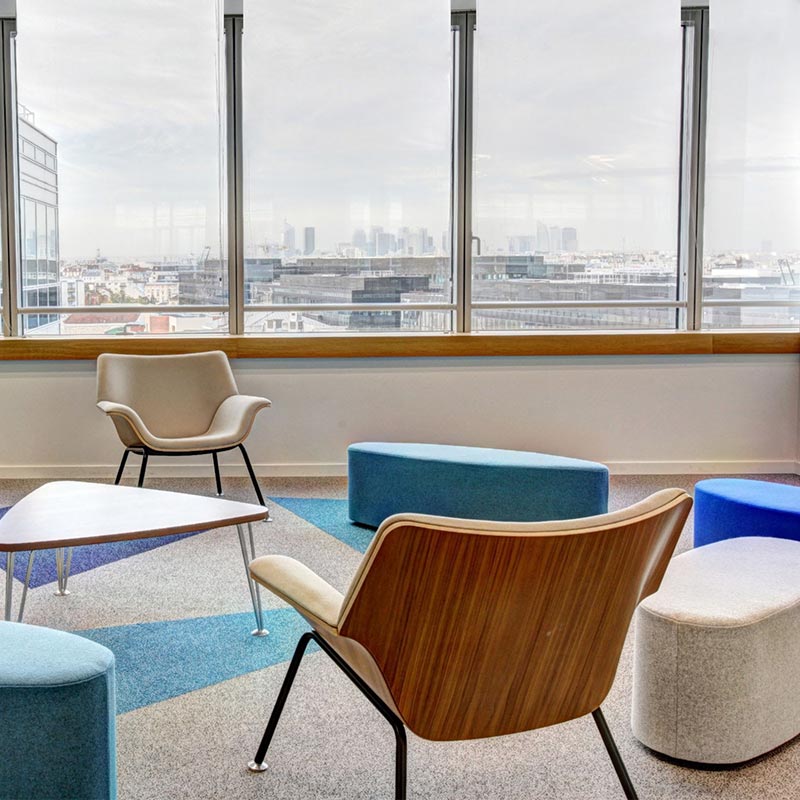
Design variation within Interface collections allows for a wide range of visual outcomes. Subtle shifts in color, texture, and pattern can be used to create movement within the space or to differentiate areas without introducing separate flooring types. This approach helps maintain consistency while still giving the space structure and definition. The project featured here demonstrates how modular flooring can be used to build a cohesive design that still accommodates variation where needed.
Modular flooring systems rely heavily on installation accuracy to perform as intended. Each tile or plank must be aligned correctly to maintain pattern continuity and avoid visual inconsistencies. Subfloor preparation is also critical, as even minor irregularities can affect how modular pieces sit and connect. This project reflects an installation process where those factors were addressed with precision, resulting in a clean and uniform finished surface.
Proper installation also supports the long-term performance benefits of modular flooring. When tiles are installed correctly, they remain stable under traffic and are easier to maintain over time. Clean edges, consistent spacing, and accurate layout execution all contribute to a finished floor that looks organized and performs reliably. These details are especially important in commercial settings where flooring is subject to constant use.
Interface flooring is often used in spaces where movement and organization need to be clearly defined. Modular layouts make it possible to guide foot traffic, create pathways, and separate functional areas without the need for physical barriers. This can be achieved through pattern direction, color variation, or changes in texture, all within the same flooring system. The result is a surface that supports how the space is used while maintaining a cohesive overall appearance.
Durability is another key factor in these environments. Flooring must hold up under consistent foot traffic, equipment use, and regular cleaning without losing its structure or visual quality. Interface products are designed to meet those demands, offering materials that balance performance with design flexibility. This project reflects how those qualities come together in a finished installation that supports both immediate use and long-term reliability.
Interface has established itself as a leading name in modular flooring by focusing on systems that combine performance, adaptability, and design consistency. Working with a brand that specializes in modular solutions allows projects to be planned with a clear understanding of how materials will perform and how they can be configured. This consistency helps support both the installation process and the long-term use of the flooring.
This showcase reflects how Interface flooring can be integrated into a real-world environment with attention to both detail and function. It highlights not just the material, but the way it is applied to support the structure of the space. For those reviewing this project, it provides a clear example of how modular flooring systems can be used to create organized, adaptable, and durable surfaces that align with the demands of commercial environments.
January 15, 2026
Interface provides carpet tile and resilient flooring solutions built to support changing layouts and long-term use. Modular systems allow for pattern variation, easier maintenance, and adaptability as spaces evolve. These materials are designed to maintain structure and appearance under regular use. Interface supports flooring installations that balance durability with layout flexibility.